Online identity - what is it and how to protect it from threats lurking on the internet?
2024-06-05
Last update 2024-06-06
Each of us has our unique identity, which is defined by a set of specific features that distinguish us from others. With the development of digital technology, there is also more and more talk about online identity and digital identity, which year by year increasingly penetrate our daily lives. How do these three concepts differ from each other? What are the benefits and what are the threats resulting from using an internet identity?
Real identity versus online identity. What is digital identity?
Real identity has many definitions, but in a broad simplification, we can say that it is the sum of specific characteristics that shape us - place and date of birth, schools we attended, clothing and shoe size, hair and eye colour. Some of these features never change, such as the date of birth, but some of them can change, e.g. hair colour.
A slightly different definition is used for online identity, which is the sum of all our individual characteristics and interactions we undertake, being in the online community and on websites. Some people using internet forums, portals, communicators or online games use their real names on the Internet, while other internet users, who value their anonymity, identify themselves using pseudonyms and avatars (graphic images). However, regardless of which option we choose, in each of these situations, online identity fully reflects us and our real preferences.
In what situations is our online identity used? There are many examples, starting from profiles on social networking sites such as Facebook, Instagram or LinkedIn, through activities carried out in everyday life, such as shopping or online payments, to activities carried out in free time, including watching series on Netflix, private conversations on social media or playing online games. Unfortunately, although it might seem that we remain completely anonymous on the internet, and only we really know what we do there, we must remember that in reality we are always “in the crosshairs”, and every our activity is constantly tracked in the form of so-called cookies.
The third concept related to identity is digital identity, or in other words, an electronic way to identify our real identity and confirm online identity. The main component of digital identity is a generally available certificate, which contains two keys - a public and a secret private key. The latter allows us, among other things, to sign electronic documents or decrypt documents that have been previously encrypted using our public key. However, it should be noted that the condition for accepting digital identity is to trust it by the recipient, i.e. verification based on certain conditions. An example of our digital identity is an electronic ID card, passport and driving licence. Thanks to it, we also have access to our bank account.
Why is digital identity so important?
The main purpose of digital identity (e-ID) is to increase our access to public and private services. It is designed to provide reliable authentication (e.g. via SMS messages or ID cards), which in turn facilitates access to various services in a 24/7 model, such as:
- applications related to documents and citizen benefits (e.g. digital ID card, digital passport, access to the platform of public administration services);
- access to online banking;
- online tools enabling tax payment and vehicle registration.
It is worth noting that authentication in the form of digital identity is treated as an equivalent of physical identity confirmation. There are many benefits from such a solution, starting from easy access to many services, which until now we could only use in person, to lower costs and a quick customer identity verification process (KYC). What’s more, digital identity allows us to avoid many threats that we encounter with online identity.
What threat does online identity pose to us?
Unfortunately, in addition to many benefits that online identity gives us, it is also associated with numerous challenges, among which the most important is internet security. Hackers are constantly trying to find new ways to bypass security and take over our sensitive data or finances, e.g. by using malware, i.e. malicious software (computer worms, adware, spyware, ransomware, etc.).
We must remember that we also create our own online identity during daily activities on the internet, such as sending emails, making purchases or posting photos on social networking sites. Cybercriminals skilfully use the digital traces we leave behind, as a result of which they can impersonate frequently visited online stores (phishing), sneak into profiles on social media, breaking too simple passwords, or send SPAM messages as specific state institutions.
In recent years, a major threat in cyberspace has also been criminals assuming a false identity (e.g. matrimonial fraudsters), who, pretending to be someone else, manipulate our feelings, trying to extort money or gain other material benefits in this way. Anonymity on the Internet also makes users often feel unpunished and post offensive content on the Internet, full of vulgarisms and harsh criticism. Sometimes these are also so-called fake news, which aim to mislead other users.
Threats to companies related to online identity
Not only private individuals have to deal with numerous threats that come from cyberspace. This is an equally difficult topic for companies from the public and private sector, which year by year are increasingly affected by attacks such as:
- DDoS attacks, which are related to sending a huge number of queries to company servers, which in effect blocks the company’s website or system;
- phishing - just like private individuals, companies can also become victims of hacker attacks, during which criminals mislead employees in order to achieve certain benefits;
- attacks on web applications - they are mainly struggled with by online stores. To obtain sensitive company data, cybercriminals try, among other things, to infect the system by installing malware on it;
- brute force attacks, the aim of which is to break passwords.
How to protect our online identity?
Protecting our online identity is something we need to remember during every activity undertaken on the Internet. Unfortunately, using secure computer hardware, professional software and antivirus programs is too little today to protect against cybercriminal attacks. What else can we do? Here is a list of the most important rules of protection in cyberspace:
- Post as little information on the Internet as possible. Remember that the content you publish on forums or on social media (even in private groups) always becomes public.
- Limit the publication of photos. Sometimes we are not aware that a document visible in the photo or a fragment of a credit card can be a source of a cyberattack.
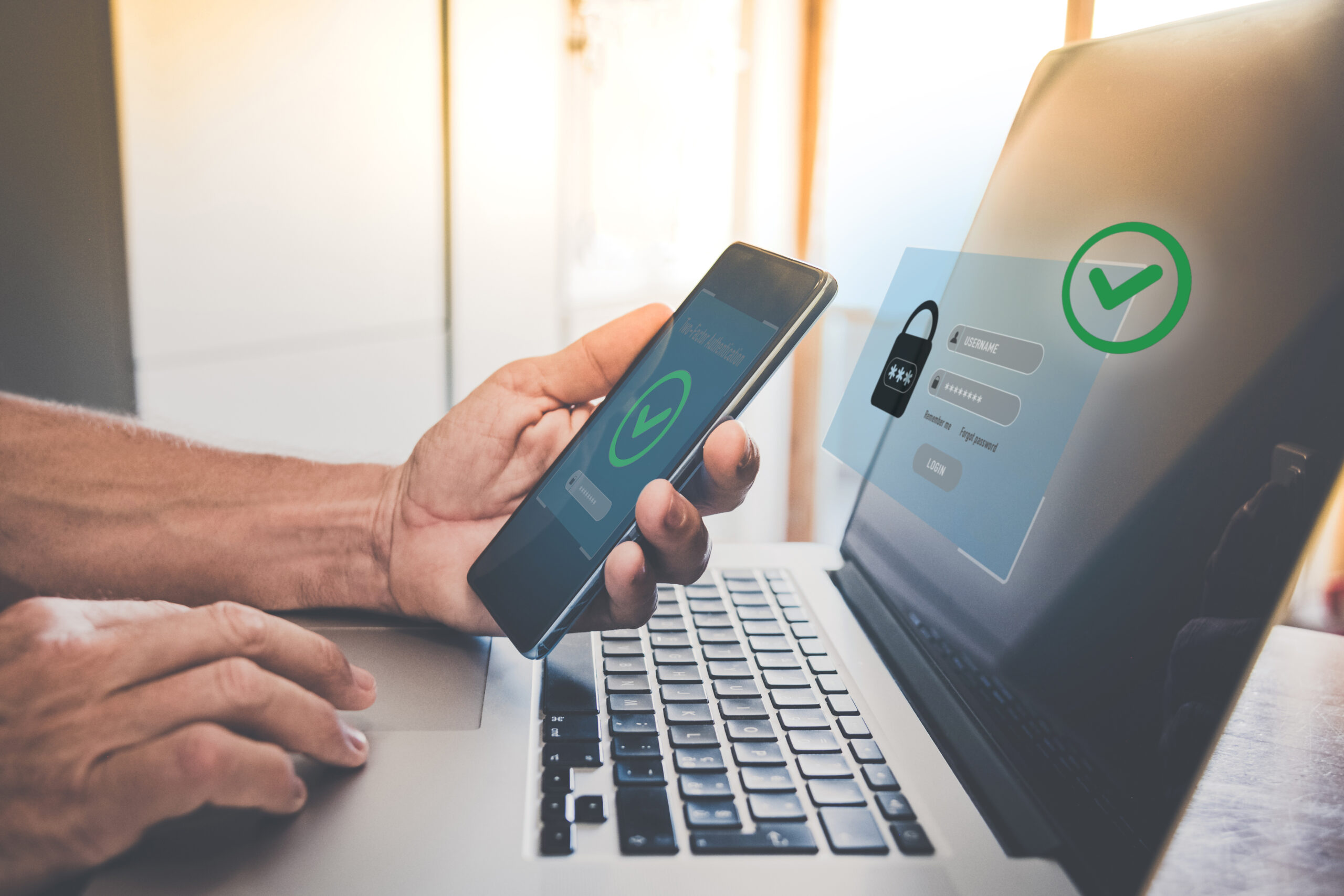
- Use unique passwords. Each account you use should have individual login data. Wherever possible, also try to set up two-factor authentication 2FA (e.g. via SMS).
Use a Password Manager. Setting different login data requires excellent memory, so if you have trouble remembering them, install a Password Manager, which stores them in a safe, encrypted way. - Never open links from an unknown source. It often happens that hackers impersonate banks or other institutions and ask us to click on the link they sent. Under no circumstances trust such people.
- Activate BIK Alerts. Thanks to this function, you will receive an SMS or e-mail notification every time there is an attempt to steal funds or defraud a loan on stolen data.
What can companies do to protect their networks and data from cyber threats? Depending on the type of attack, they can use many solutions, including:
- phishing - installation of special software that allows filtering and blocking phishing messages, and also provides protection against data loss from email. It is also worth educating employees in the context of cyber threats and showing them how hackers can try to defraud them of data;
- DDoS attacks - installation of software that filters suspicious network traffic, and at the same time protects company computers from an attack paralyzing the entire network;
- attacks on the company’s network - one of the ways is regular updating of software used in the company, i.e. operating systems and software on mobile devices. The second important issue is the use of tools for monitoring and securing traffic in the company network.
Identity theft on the Internet is an increasingly common phenomenon, which can generate significant image and financial losses. Only in the first half of 2020, the number of ransomware attacks increased by as much as 700% compared to the same period in the previous year. Unfortunately, this problem is intensifying year by year, so it is worth consistently implementing steps aimed at protecting against suspicious activities undertaken by cybercriminals.